
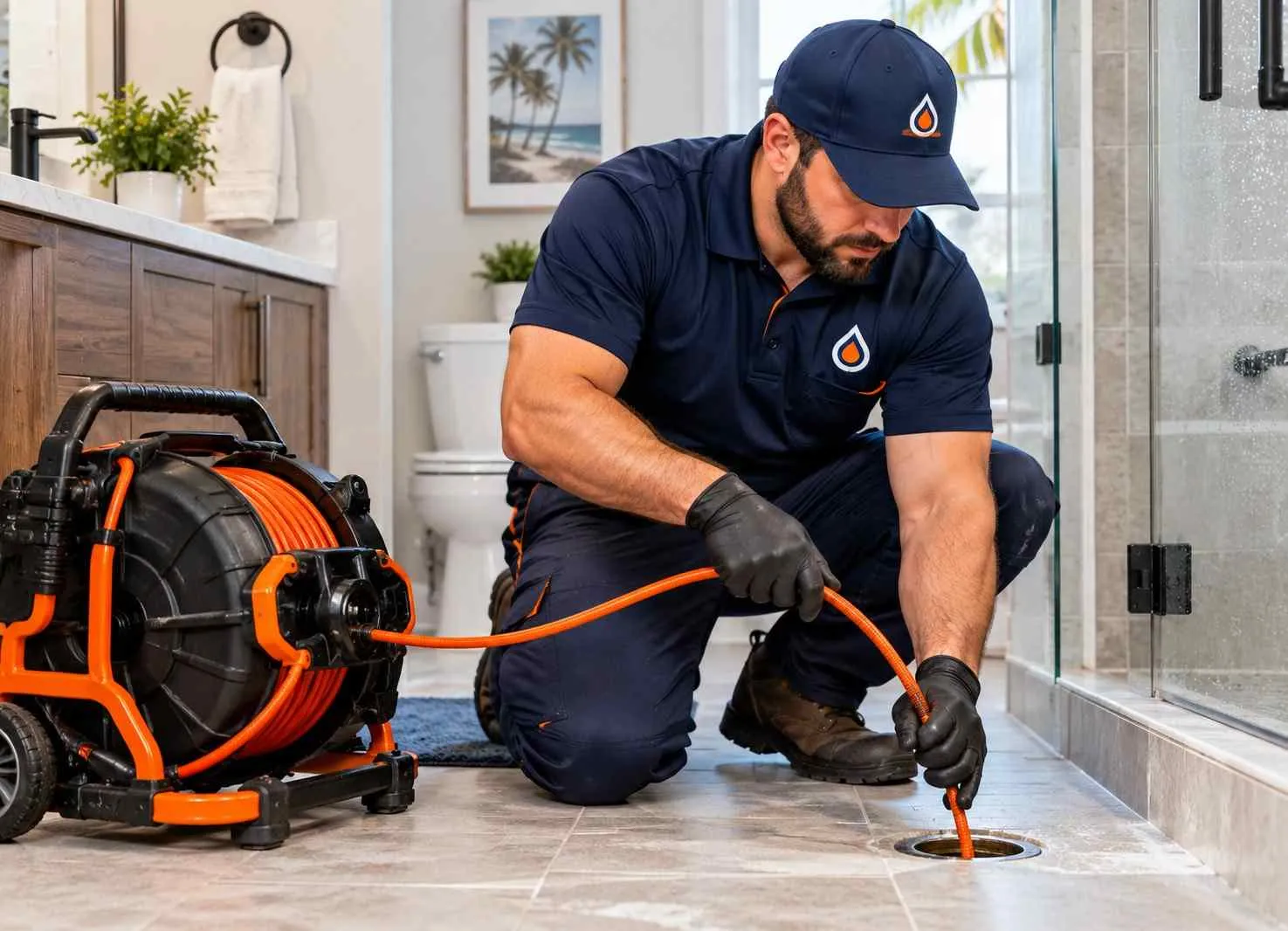
First: Is the Smell Coming From the Water or the Drain?
Before cleaning anything, separate the faucet water from the drain.
Sarasota County recommends filling a glass with tap water, moving away from the sink, and smelling the water in a different location. If the odor disappears when you leave the sink, the source is more likely the drain or piping rather than the water supply.
That simple test can prevent you from treating the wrong problem.
Sarasota County explains this troubleshooting method in its officialwater quality guidance.
What Different Drain Odor Patterns Can Suggest
| What You Notice | Possible Area to Check |
|---|---|
| Odor only at one frequently used sink | Drain buildup or fixture-specific issue |
| Odor from a rarely used drain | Dry P-trap |
| Odor plus slow drainage | Buildup or partial restriction |
| Odor plus gurgling | Drainage or venting issue may be involved |
| Odor from several fixtures | Wider plumbing system deserves attention |
| Odor around septic tank or drainfield | Septic system should be evaluated |
The smell alone cannot diagnose the exact cause. The surrounding symptoms matter.
1. Organic Buildup Inside the Drain
Kitchen and bathroom drains collect different types of material.
A kitchen drain may receive grease, food residue, oils, and other organic matter. Bathroom drains may collect hair, soap residue, toothpaste, skin oils, and grooming products.
Material that remains inside the drain can trap moisture and decompose, creating unpleasant odors even before the pipe becomes fully blocked.
If the fixture is also becoming slower, the odor may be part of a developing restriction.
Our guide to clog causes explains how different materials accumulate inside drainage lines.
2. A Dry P-Trap Can Let Sewer Odors Enter
The curved pipe underneath many fixtures is called a P-trap.
Water normally sits inside the trap and creates a seal between the room and the drainage system.
If that water evaporates, sewer odors can move through the open trap.
This can happen with:
rarely used guest bathrooms;
floor drains;
vacant or seasonal properties;
fixtures that have not received water for an extended period.
Sarasota County specifically notes that P-traps on sinks and showers can become dry and allow sewer odors into a home. The county recommends running water through affected fixtures to refill the trap. See itswastewater guidance.
This is particularly useful to remember in seasonal Sarasota properties that may sit unused for part of the year.
3. Venting Problems Can Affect Odor Control
Drainage systems also depend on vent piping.
The International Plumbing Code explains that plumbing vents maintain airflow and help protect the water seal inside fixture traps so waste and odors do not blow back through fixtures.
If a vent is blocked, damaged, improperly configured, or unable to balance pressure correctly, odors may appear alongside gurgling or unusual drainage behavior.
A venting problem should not automatically be treated as a dirty drain.
If you hear gurgling as well as noticing odors, pay attention to whether other fixtures react at the same time.
4. A Slow or Partially Blocked Drain May Hold Odor-Causing Material
A drain does not need to be completely clogged to create problems.
A partial restriction can catch additional material, hold moisture, and allow organic residue to remain inside the line.
Clues include:
slower drainage;
odor returning shortly after cleaning;
standing water;
repeated clogging.
Our drain signs guide explains how to judge those symptoms separately.
5. Sewer Odor Plus Multiple Drain Problems Needs a Wider Look
One smelly sink may be a localized problem.
Odors combined with several slow drains, toilet gurgling, backups, or wastewater appearing in another fixture point to a different pattern.
Do not assume the odor itself proves a main sewer blockage, but do not keep treating individual fixtures independently if several are changing together.
See our multiple drains guide for that diagnostic pattern.
6. Septic Properties Have Additional Odor Sources
Homes using septic systems need to consider the tank, drainfield, and venting system as well as indoor drains.
The EPA lists sewage odors, slow drains, gurgling, backups, and unusually wet areas near a drainfield among possible signs that a septic system needs attention.
EPA also explains that septic odors may sometimes come from normal venting or an obstructed vent rather than system failure.
Property owners can review the EPA's officialseptic guidance.
What Should You Do About a Smelly Drain?
Start with the simplest observations.
Check the Water
Use the glass test to determine whether the smell follows the water away from the sink.
Run Water in Rarely Used Fixtures
If the drain has not been used recently, refill the P-trap and see whether the odor disappears.
Note Other Symptoms
Look for slow drainage, gurgling, standing water, repeat clogs, or backups.
Track Whether the Odor Returns
An odor that disappears after basic cleaning but repeatedly returns may indicate persistent buildup or another underlying condition.
When Is a Drain Smell More Than a Cleaning Problem?
Take the problem more seriously when the odor is strong and persistent or appears with:
wastewater backup;
several affected drains;
repeated gurgling;
an emptying P-trap;
visible septic-system problems;
recurring drainage restrictions.
Sewer gases are not simply an unpleasant smell. EPA indoor-air guidance notes that some sewer-gas components, including hydrogen sulfide, can cause irritation at sufficient concentrations.
The correct response is therefore to identify the source rather than repeatedly covering the odor with fragrances or drain chemicals.