Several Drains Are Slow
Understand why several fixtures changing together can point beyond one isolated drain.
What Causes a Slow Drain? → SARASOTADRAIN PROS

Understand common drain symptoms, causes, cleaning methods, maintenance choices, and deeper line problems with focused informational guides from Sarasota Drain Pros.
You do not need to know the cause first. Start with the symptom you can actually see, hear, or smell, then open the guide that matches it.
Understand why several fixtures changing together can point beyond one isolated drain.
What Causes a Slow Drain? →Learn how grease, hair, wipes, debris, roots, and pipe conditions create restrictions.
Why Drains Keep Clogging →Recognize slow flow, repeat clogs, standing water, odors, gurgling, and backups.
Why Are Multiple Drains Slow? →Separate drain buildup, dry traps, venting, water-quality, and septic-related odor clues.
Why Does My Drain Smell? →The guide library is organized by user task rather than a random article list. Each article owns one informational question and leads to a related guide or service only when that next step makes sense.

Learn what a multi-fixture pattern can mean and what information helps narrow the problem.
Read Guide →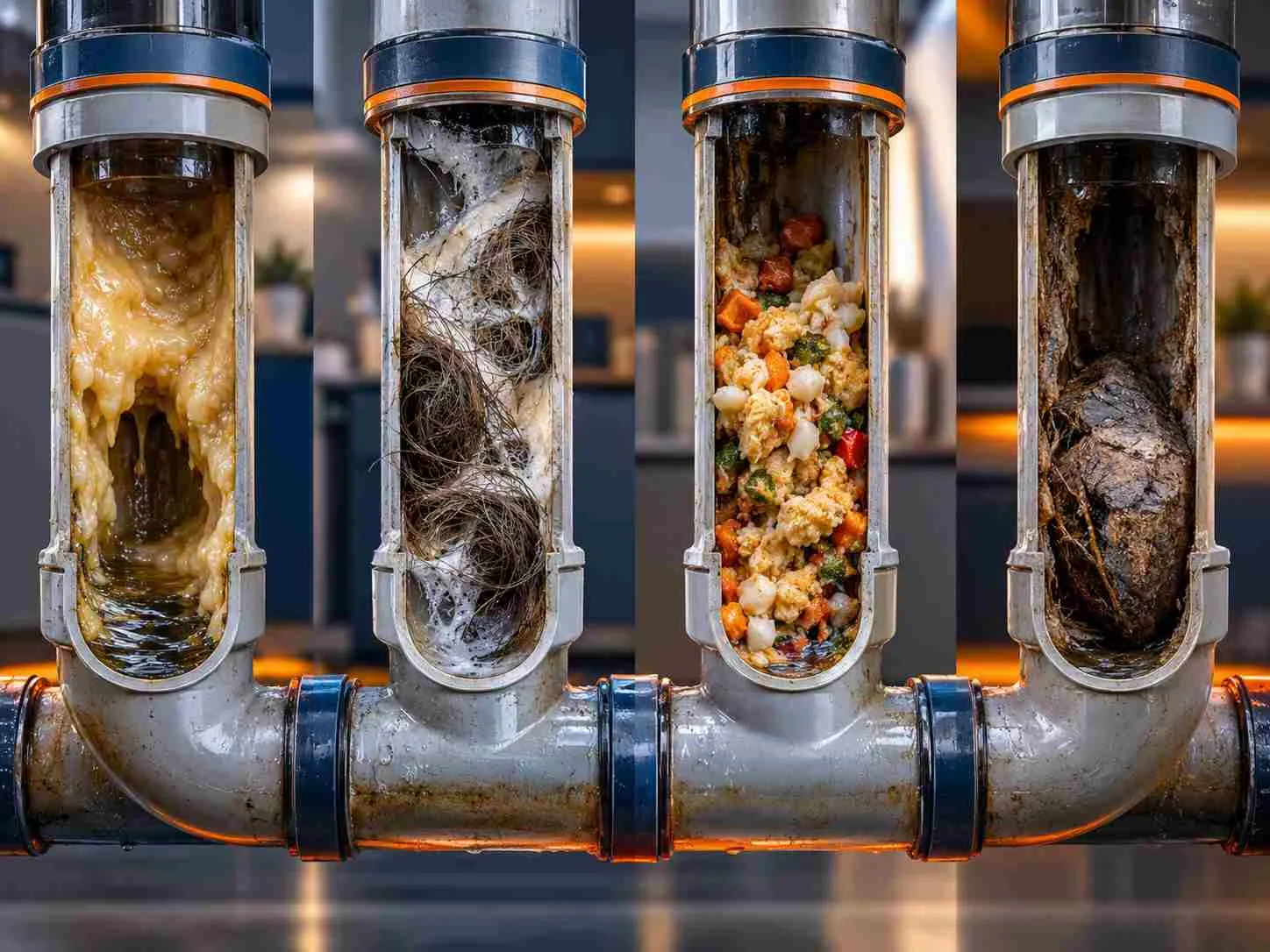
Understand the materials and conditions that commonly create drain restrictions.
Read Guide →
Know the warning signs that show normal drainage is starting to change.
Read Guide →
Review current planning benchmarks and the factors that can change drain-cleaning cost.
Read Guide →
Compare two different drain-cleaning methods and the conditions each method can fit.
Read Guide →
Build a maintenance schedule around use, history, and drain condition instead of a fixed rule.
Read Guide →
Trace drain odors to buildup, dry traps, venting, water quality, or wider system conditions.
Read Guide →
Use practical household habits to reduce unnecessary buildup and protect normal drainage.
Read Guide →
Learn how roots enter defective underground piping and why removal differs from pipe repair.
Read Guide →
See when video inspection adds useful evidence and when cleaning may need to come first.
Read Guide →
Understand chemical safety, pipe considerations, septic concerns, and mixing hazards.
Read Guide →A guide can help you understand the symptom. When slow drainage keeps returning, a fixture stops draining, or standing water starts affecting normal use, move from research into the drain service that best matches the actual problem.
Best for kitchen sinks dealing with grease buildup, food residue, standing water, foul smells, or recurring kitchen drain clogs.
Explore Kitchen Drain Cleaning →Best for bathroom sinks, tubs, and showers affected by hair, soap residue, slow drainage, or repeated fixture backups.
Explore Bathroom Drain Cleaning →Best for restaurants, offices, retail spaces, and other commercial properties dealing with recurring drain restrictions or backups.
Explore Commercial Drain Cleaning →Best for suitable drain lines with heavier buildup or recurring restrictions that need a more thorough high-pressure cleaning method.
Explore Hydro Jetting →